Contents
Introduction
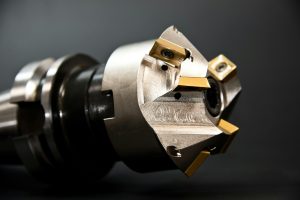
Automobiles, as representatives of advanced manufacturing, place high demands on the precision and flexibility of production equipment. Cutting tools are the most critical and dynamic element in machining processes, significantly influencing product quality and production efficiency. According to statistics, about two-thirds of investments in the automotive industry are allocated to purchasing manufacturing equipment. Among these, cutting tools have a direct and significant impact on the final product’s quality and production costs. For example, in car production, the consumption of cutting tools amounts to only about 3% of production costs but influences up to 25% or more of the total production costs. Many processes require specialized or combined cutting tools, such as engine crankshafts, where operations like internal milling, turning, or high-speed external milling must use specialized tools. These tools are complex to manufacture, with high technical requirements, thereby posing significant challenges to cutting tool manufacturers. Therefore, the development of automotive cutting tools plays a crucially important role in the prosperity of the automotive industry and the entire manufacturing sector. Overall, the characteristics of cutting tools in the automotive industry are reflected in the following aspects:
Stability and Consistency of Cutting Tools
Automotive production requires highly repeatable and consistent processes. Long-term supplied tools must maintain consistent quality, such as identical tool life and dimensional deviations. Consistency in critical dimensions is particularly important, requiring tools from different batches to have high uniformity. If the stability and consistency of the tools are poor, it can lead to dimensional fluctuations in automotive parts, significantly reducing interchangeability and making it difficult to predict tool replacement times. In some cases, tools may experience abnormal wear after processing just a few parts, leading to premature failure. This creates significant inconvenience for machine operation and tool management and may even result in scrap parts during processing. Therefore, our company places great emphasis on the stability and consistency of tools and has invested significant effort in controlling these aspects.
Cutting Tools Must Meet High-Speed Machining Requirements
High-speed machining is an advanced manufacturing technology characterized by high efficiency, precision, and surface quality. Compared to conventional machining, it offers the following advantages:
- High material removal rate.
- Consolidated processes and shortened machining time, reducing costs.
- Lower cutting forces and vibrations, ensuring smoother machining.
- Minimal thermal deformation.
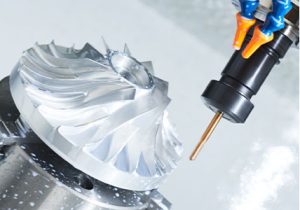
High-speed machining has gained widespread application in the automotive industry and has achieved significant technical and economic benefits, becoming an essential component of modern advanced manufacturing technology. However, high-speed machining imposes stringent requirements on cutting tools, such as high thermal conductivity, low friction coefficients, extreme hardness, and excellent wear resistance. For example, KD’s high-speed milling cutter series for aluminum processing uses ultra-fine grain tungsten carbide rod blanks, allowing spindle speeds of up to 30,000 rpm, cutting speeds of 2,000 m/min, and feed rates of 2 m/min, greatly improving machining efficiency. Similarly, the FMA09 and EMP07 series tools, made from specially treated high-strength aluminum alloys, are lightweight and high-strength, capable of cutting speeds up to 5,000 m/min, making them ideal for high-speed face milling and fillet machining of aluminum alloy materials.
Cutting Tools Must Meet Specialized and Combined Requirements
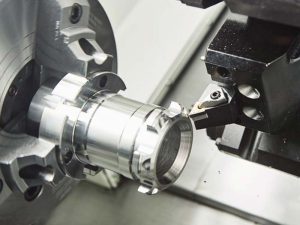
To fully utilize the advantages of high-efficiency machining equipment, such as CNC machining centers and milling-turning centers, and to leverage their automatic tool-changing functionality, machining of complex parts should adopt the principle of consolidated processes. This means achieving multiple operations in a single clamping setup, blurring the traditional boundaries between turning, milling, boring, and threading. It also necessitates tools that can perform multiple functions, reducing tool changes and saving time. Common examples include multifunctional turning tools, milling tools, milling-boring tools, drill-milling tools, and tools for drilling, milling, threading, and chamfering. In batch production lines, the use of specialized or combined tools can significantly improve efficiency and precision while reducing costs. In some cases, specialized tools can reduce machining time for parts to less than one-tenth of the original time, with remarkable results. Therefore, by combining the machining characteristics of automotive components, precision requirements, CNC technology, workpiece materials, and production rhythms, specialized and optimized tool designs can ensure and enhance production efficiency while reducing costs. Examples of such tools include KD’s developed crankshaft sleeve turning tools and engine block crankshaft semi-circular hole milling-boring tools.
Cutting Tools Must Have High Machining Precision
Many critical automotive components require extremely high machining precision, which in turn demands higher precision from cutting tools. For example, the machining of engine valve guide bores and valve seat rings has stringent requirements that directly impact engine efficiency. These requirements include:
- Sealing performance of valve seat bores, typically requiring a surface roughness of Ra 0.8 and runout of 0.03 mm to 0.05 mm, sometimes even 0.01 mm.
- Tolerances and straightness of valve guide bores, with a tolerance of only 0.011 mm for bores with diameters of 5 mm and 7 mm.
- Outer surface flatness and absence of burrs.
These demanding requirements for guide bore machining impose stricter demands on the cutting tools, such as tight tolerance control and excellent circularity or straightness. Failure to meet these requirements can make it difficult to achieve desired machining results.
In recent years, KD has made significant breakthroughs in the fields of tungsten carbide base materials, coating technology, tool structure design, and insert groove development. The company has designed and developed tools tailored to the machining requirements and production configurations of automotive parts, successfully solving the tooling challenges for engine blocks, cylinder heads, connecting rods, camshafts, and crankshafts. This has provided comprehensive machining solutions for the automotive manufacturing industry.
More Articls